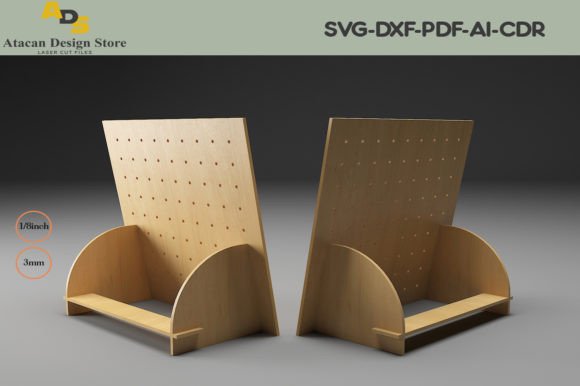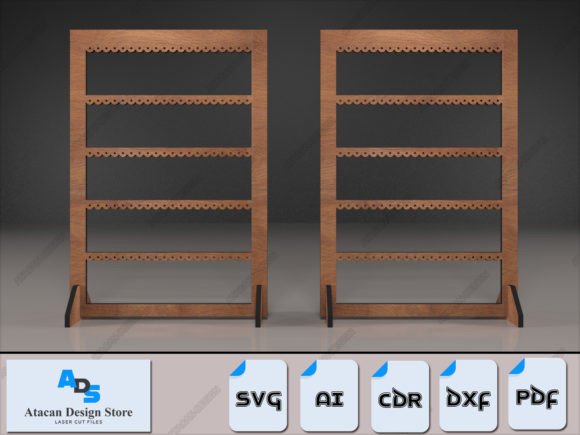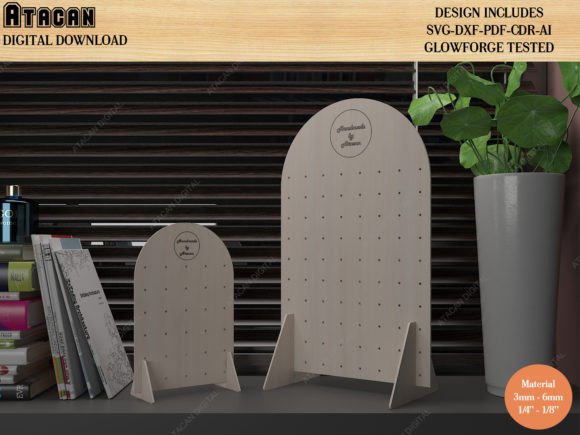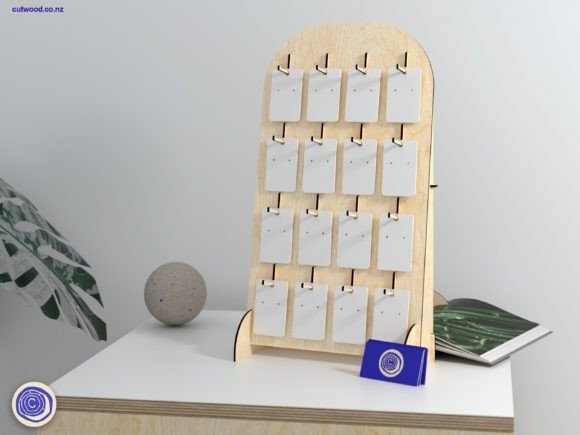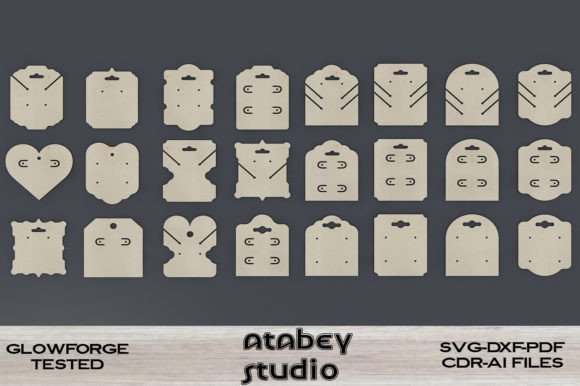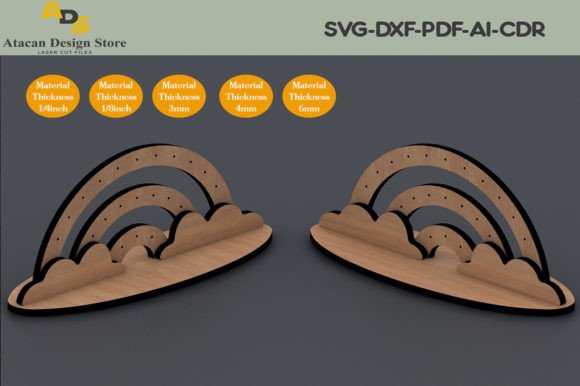
Plywood Jewelry Stand Earring Display
As a designer who spends more time than I care to admit staring at stitch charts and fabric swatches, I have learned that the most successful embroidery projects are not just about technical perfection—they are about context. You can have the cleanest satin stitch in the world, but if it doesn’t fit the vibe of the product or the brand identity, it falls flat. Recently, I’ve been evaluating various design assets for my own small business line and for client consultations, and one concept keeps coming up in discussions about handmade presentation: the Plywood Jewelry Stand Earring Display. While this item is technically categorized under Other Jewelry and involves Laser Cutting, its visual language and structural simplicity make it an interesting case study for how non-embroidery assets influence our perception of finished textile products.
First Impressions: The Mood and Visual Personality
When you look at a design intended for a jewelry stand, you aren’t looking at a complex narrative scene; you are looking at structure, elegance, and utility. The Plywood Jewelry Stand Earring Display evokes a mood of modern minimalism. It feels grounded, warm, and intentionally crafted. For an embroidery designer, this translates to a specific aesthetic preference: clean lines, balanced negative space, and a focus on form over excessive decoration.
This visual personality naturally belongs to projects that prioritize sophistication. It fits perfectly with brands that sell linen, organic cotton, or high-quality blends. When I imagine this design in a real-world scenario, I don’t see it cluttered with overly dense fill stitches or chaotic applique work. Instead, I see it as a backdrop for refined detailing. The "mood" here is quiet luxury. It suggests that the wearer or user values craftsmanship. This is crucial for any craft business owner trying to justify premium pricing. Customers buy into the story, and the story here is one of thoughtful, durable design.
Real-Life Application: From Sketch to Finished Product
Let’s talk about practical use. I recently helped a client brainstorm ideas for a boutique wedding gift set. They wanted to include a custom embroidered piece alongside handmade accessories. We landed on a concept involving a personalized apron and a matching tote bag, both featuring subtle, elegant motifs that echoed the geometric precision of a Plywood Jewelry Stand Earring Display. The idea was to create a cohesive brand experience where the packaging and the product felt like part of the same universe.
In this context, the Plywood Jewelry Stand Earring Display isn’t just a physical object; it’s a design reference point. It tells us what works. For example, when designing an embroidered patch for a cap or a sweatshirt embroidery project, we can borrow the structural confidence of the jewelry stand. We might use a single, bold outline or a carefully placed cluster of running stitch details that mimic the clean edges of laser-cut wood. This approach works beautifully for personalized gifts because it feels intentional rather than random.
Consider also the market for Etsy sellers and small shop products. There is a huge demand for nursery decor and baby items that are visually calming. A design inspired by the simplicity of a jewelry stand—perhaps translated into soft, rounded shapes using fill stitch techniques—can be incredibly appealing to parents looking for minimalist aesthetic for their homes. It bridges the gap between functional home goods and decorative art. Whether it’s a kitchen towel with a simple geometric border or a pillow cover with a central monogram framed by clean lines, the principle remains the same: less is often more.
Where to Use It Carefully
However, not every surface is created equal. As an experienced reviewer, I must highlight where this design philosophy—and by extension, designs inspired by it—requires caution. If you are attempting to replicate the crisp, clean look of a laser-cut plywood display on certain fabrics, you need to be strategic.
- Small Hoop Sizes: Trying to fit intricate details meant for a larger display into a tiny hoop can result in lost definition. Always check your hoop size constraints before finalizing the file.
- Textured and Stretchy Fabrics: The clean lines of a jewelry stand rely on smooth surfaces. On a highly textured bouclé or a stretchy jersey knit, those lines can distort. Use a proper stabilizer to keep the fabric taut and prevent puckering.
- Dense Stitch Areas: If you try to pack too much detail into a small area, you risk creating a stiff, cardboard-like feel. This undermines the softness expected in apparel. Aim for breathable stitch density.
- Curved Surfaces: Applying this kind of structured design to a cap or a curved hat requires careful digitizing to account for the curve, otherwise, the symmetry will be off.
Impact on Value and Customer Trust
Why does this matter? Because consistency builds trust. When a customer buys a handmade product, they are investing in your eye for detail. If your embroidery project looks sloppy or ill-fitting, it reflects poorly on the entire brand. A design that respects the limitations of the medium and the strengths of the material—much like a well-made jewelry stand respects the grain of the wood—signals professionalism.
This is especially true for commercial embroidery clients. They want their logo or artwork to look sharp and recognizable. By studying the clarity and balance of assets like the Plywood Jewelry Stand Earring Display, designers can learn how to arrange elements for maximum impact. It teaches us about spacing, alignment, and hierarchy. These are universal principles that apply whether you are stitching on denim or cutting vinyl.
Practical Designer Notes
Before you commit to a full production run, follow these steps to ensure your finished product meets professional standards:
- Test on Scrap Fabric: Never assume a design will work on your final material. Test it on scraps first to check for tension issues and thread breakage.
- Check Thread Color Contrast: Ensure your thread colors pop against the fabric background. Light threads on dark fabric (or vice versa) generally offer the best readability.
- Review Stitch Density: Look at the stitch density in your digitizing software. Is it too heavy? Too light? Adjust as needed to match the fabric weight.
- Inspect Small Details: Zoom in on the digital file. Are there tiny corners that might get lost in stitching? Simplify if necessary.
- Use Proper Stabilizer: Choose a cut-away or tear-away stabilizer appropriate for your fabric type to maintain stability during embroidery.
- Confirm Licensing: If you plan to sell the digital embroidery file or the finished product, double-check the license terms. Commercial rights are essential for small business merchandise.
In conclusion, while the Plywood Jewelry Stand Earring Display is not an embroidery file itself, its design ethos offers valuable lessons for any creative entrepreneur. It reminds us that good design is about clarity, purpose, and respect for materials. By applying these principles to your custom apparel, holiday embroidery, or branding projects, you can create pieces that not only look beautiful but also stand the test of time and frequent washing. Whether you are a hobbyist making a personalized gift for a friend or an Etsy seller building a catalog, let the simplicity and strength of that jewelry stand guide your needle.